
A good deck installation in Sydney comes down to four decisions: the material (hardwood, treated pine or composite), whether your site needs approval, the subframe underneath, and who builds it. Installed prices commonly fall between roughly $200 and $600 per m² depending on material and site, and only small, low, rear-yard decks qualify for approval-free “exempt development”, so check your site before you sign anything.
MVR Decking is a Sydney deck company led by owner Michael Ranieri, who has more than 12 years of hands-on experience designing, supplying and installing timber and composite decks. This guide covers what we would want any homeowner to know before they talk to decking installers: what suits Sydney conditions, what the rules actually say, what it costs, and how to separate a licensed, well-run builder from a risky one.
Why Sydney Homeowners Are Investing in Custom Deck Installations
Sydney lots are often compact, sloping or awkwardly shaped. A custom deck turns that unused ground into a usable room, which is why we are asked to build everything from small rear landings to full alfresco and pool-surround decks, from the Sutherland Shire to the Inner West.
Bridging indoor and outdoor living for effortless Sydney entertaining
Sydney’s outdoor lifestyle makes a well-positioned deck a natural extension of the home.
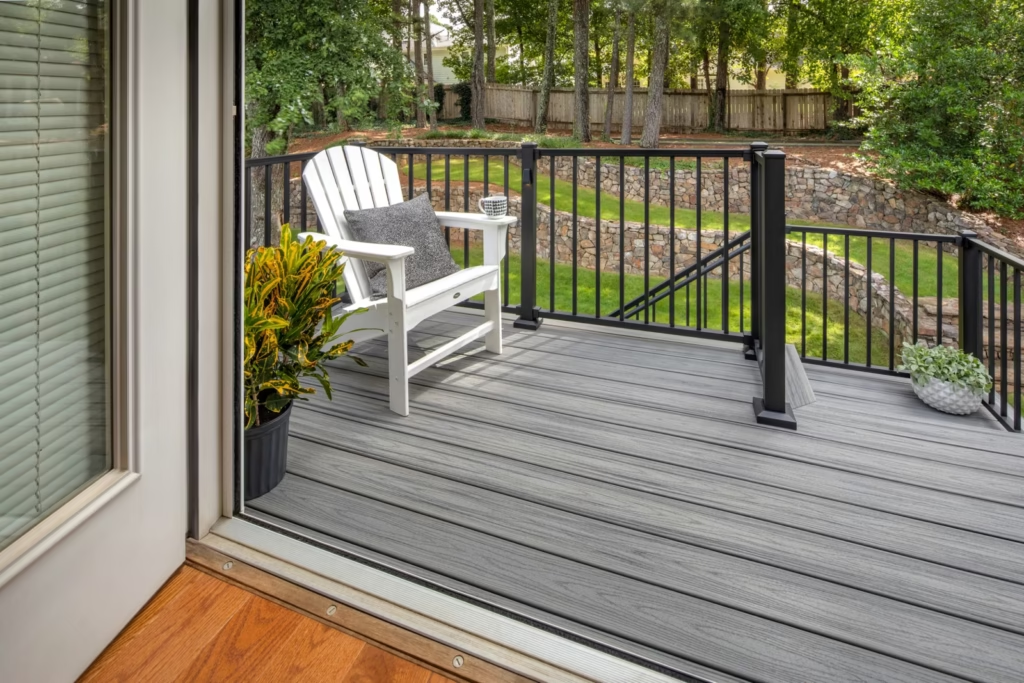
A deck adjoining a kitchen, dining area or living room can create a smoother transition between indoor and outdoor spaces. It can provide room for outdoor dining, seating, barbecues or simply a place to enjoy the backyard.
The most effective design considers the relationship between the deck, existing doors, windows, landscaping and the home’s overall layout.
Maximising underutilised yards, sloping sites, and poolside zones
Not every Sydney backyard has a simple, level layout.
A professionally designed deck can help make practical use of:
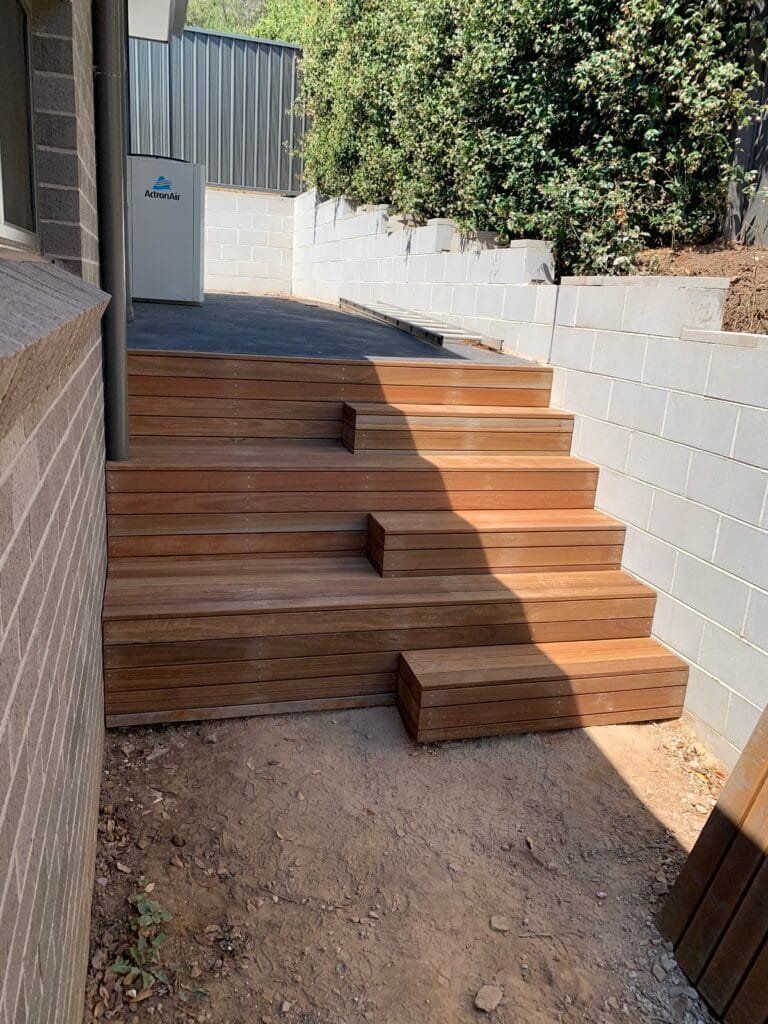
- Sloping sites: a deck on piers or posts can create a level entertaining area without major excavation or retaining walls, although taller structures cost more (see the cost section).
- Narrow or awkward yards: built-in seating, planters and stairs can make a small space work harder.
- Pool zones: a deck beside a pool can affect the pool barrier, including climbable zones near the fence. The barrier must still comply, so involve your pool certifier early. See the NSW Swimming Pool Register.
Sloping sites require particularly careful planning because the supporting structure, drainage, access and ground conditions can influence both construction requirements and cost.
Rather than forcing a standard design onto the property, experienced deck builders in Sydney can assess the site and develop a solution around its existing characteristics.
Increasing long-term property equity and suburban street appeal
A quality deck can improve how a property functions and how its outdoor areas are presented.
However, homeowners should view potential property value as a secondary benefit rather than a guaranteed financial return. The value of a deck depends on factors including its design, workmanship, materials, overall property condition and buyer expectations in the local market.
The strongest investment is generally a deck that is well integrated with the home and genuinely improves everyday use of the property.
Choosing the Right Material: Hardwood, Treated Pine, or Modern Composite
There is no single decking material that is best for every Sydney property.
Your decision should consider appearance, budget, maintenance, expected lifespan, exposure to weather and how you intend to use the deck.
Premium native Australian hardwoods: Spotted Gum, Merbau, and Blackbutt
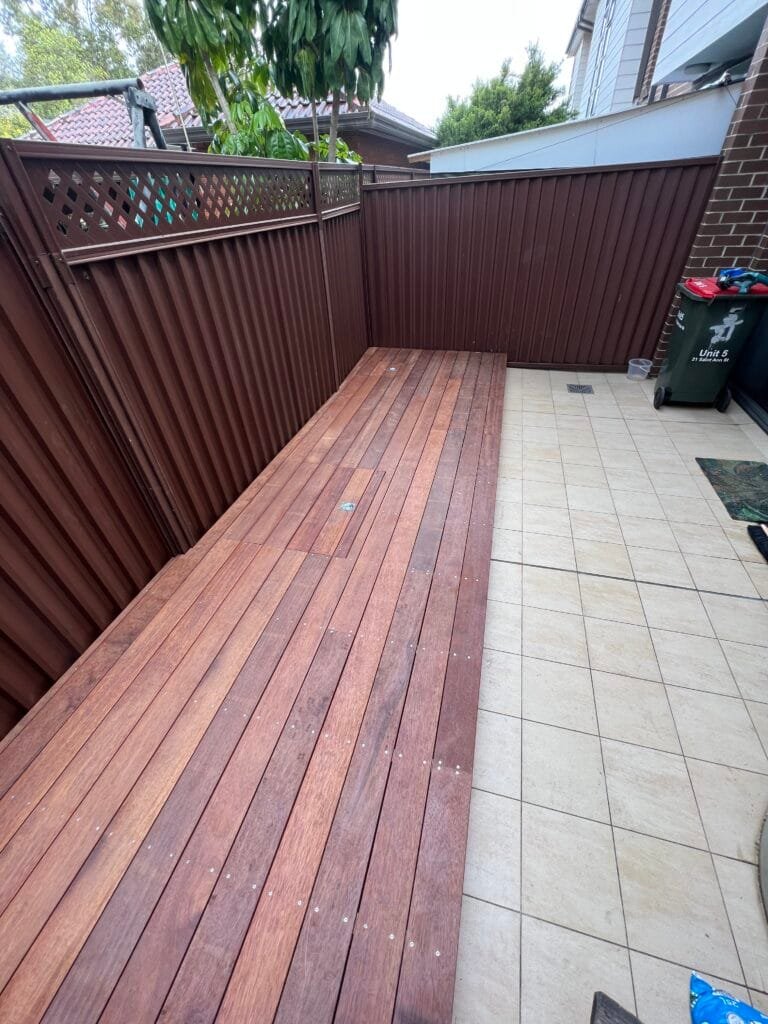
Hardwood decking remains a popular choice for homeowners seeking a natural timber appearance.
Spotted Gum, Merbau and Blackbutt can provide distinctive grain patterns and a substantial timber finish. Hardwood is particularly attractive when the natural appearance of timber is an important part of the home’s design.
Timber decking does require ongoing maintenance. Depending on the selected product and desired appearance, homeowners may need to clean, oil or otherwise maintain the boards over time.
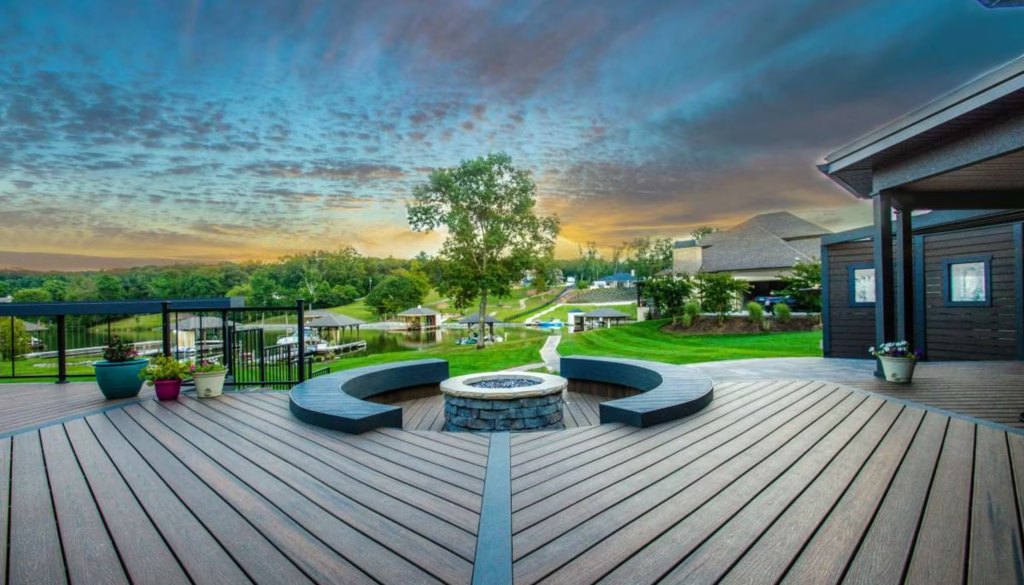
Next-generation composite decking: Zero sanding, zero oiling, and extreme fade resistance
Composite decking is designed to reduce the maintenance associated with traditional timber.
Depending on the product selected, composite boards can offer resistance to issues such as fading, moisture and everyday wear. They generally do not require the same sanding and oiling routine associated with maintaining natural timber.
However, “low maintenance” does not mean “maintenance-free.” Composite decking should still be cleaned periodically, and homeowners should follow the manufacturer’s installation and care instructions.
When comparing composite products, look beyond appearance and consider warranty conditions, slip characteristics, heat retention, board expansion, installation requirements and the suitability of the product for the site’s exposure.
Treated pine decking: An economical entry point for budget-conscious homeowners
Treated pine can provide a more accessible starting point for homeowners working with a tighter construction budget.
It can be a practical choice where the homeowner is comfortable with regular maintenance and wants the appearance of traditional timber.
The initial material cost is only one part of the decision. Consider the expected maintenance requirements and long-term ownership costs before choosing based solely on the upfront price.
NSW Building Codes, DA Approvals, and Compliance Rules
Deck construction in NSW can involve planning and building requirements depending on the proposed structure, its dimensions, location and site conditions.
Some decks may qualify for exempt or complying development, while others may require development approval or another form of approval.
Factors that can affect requirements include:
- Deck height
- Location and boundary setbacks
- Site constraints
- Bushfire considerations
- Heritage restrictions
- Swimming pool proximity
- Stormwater and drainage considerations
- Structural requirements
- Local planning controls
Homeowners should not assume that a deck is automatically exempt from approval because it is relatively small.
The NSW Government’s Planning Portal and your local council are useful starting points for confirming the planning pathway that applies to your property.
Where building work requires certification, the relevant construction must also comply with applicable requirements under the National Construction Code (NCC) and relevant Australian Standards.
For a specific property, approval and compliance requirements should be confirmed before construction begins.
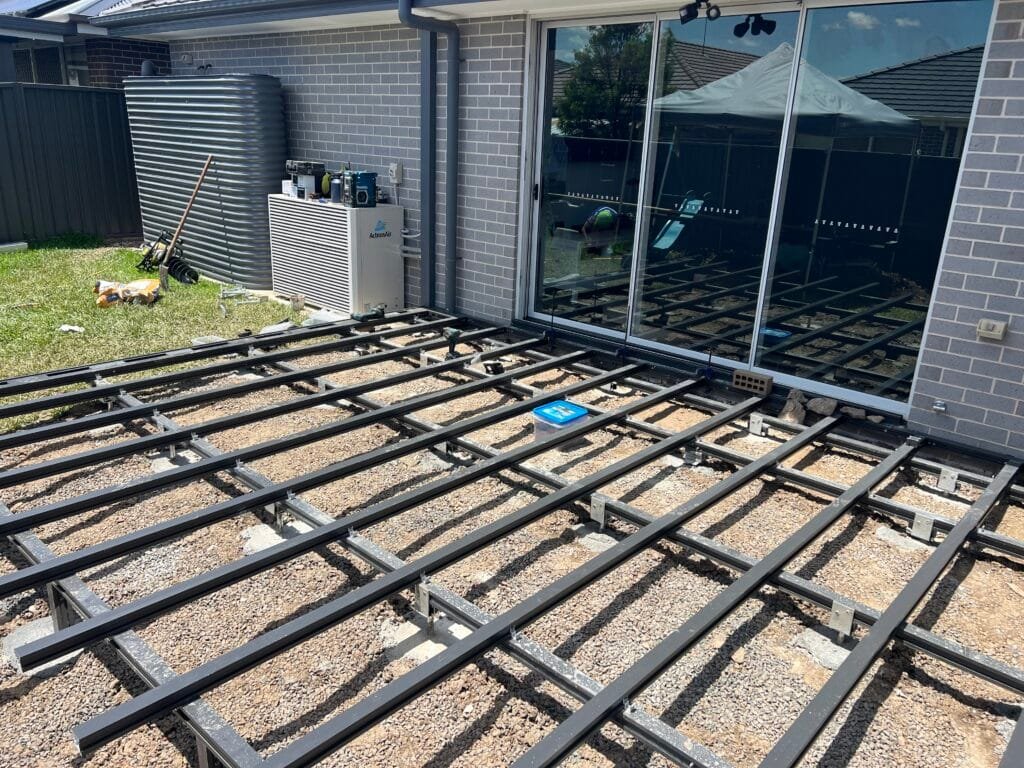
Subframe Engineering: Timber Framing vs. Termite-Proof Aluminium
The decking boards are only one part of the structure. The subframe underneath them plays a critical role in the deck’s stability, durability and performance.
Traditional timber subframes can be suitable for many projects when correctly designed, installed and protected for the conditions.
Aluminium framing provides another option, particularly where homeowners want a lightweight structural system with strong resistance to corrosion, moisture and termite attack.
The appropriate system depends on the site, structural design, deck height, spans, exposure and selected decking product.
A professional installer should consider the complete system rather than selecting boards and subframe components independently.
Sydney Decking Cost Guide: Budgeting for Materials & Installation
There is no reliable single price per square metre for every Sydney deck.
The final cost can vary substantially depending on:
|
Cost factor |
Why it matters |
|
Deck size |
Larger decks require more materials and labour |
|
Decking material |
Hardwood, pine and composite have different material costs |
|
Site access |
Difficult access can increase labour and handling requirements |
|
Ground conditions |
Footings and structural work can vary by site |
|
Slope |
Elevated or sloping sites can require more complex framing |
|
Stairs |
Additional construction and structural work increases costs |
|
Balustrades |
Design and material selection affect the overall budget |
|
Demolition |
Removing an existing deck adds labour and disposal costs |
|
Approvals |
Certification, engineering or approval requirements may add costs |
|
Finishing |
Painting, staining, oiling and other finishing work can affect the final price |
For this reason, a site-specific quote is more useful than relying on a generic online decking price.
A good quote should clearly explain what is included, including materials, structural work, installation, stairs, balustrades, demolition where applicable and any professional or approval-related costs.
How to Choose the Best Licensed Deck Builders in Sydney
Choosing a deck company should involve more than comparing the cheapest quote.
Before engaging a contractor, consider:
1. Review relevant experience
Look for a builder or installer with experience completing projects similar to yours, particularly if your property has a slope, elevated deck, pool area or difficult access.
2. Check licensing and insurance
For work that requires licensing, confirm the contractor’s NSW licence details and ensure appropriate insurance arrangements are in place.
NSW homeowners can use Service NSW and NSW Fair Trading resources to check relevant licensing information.
3. Ask what is included in the quote
A detailed written quote should make it easier to compare contractors fairly.
Ask whether the quoted price covers:
- Site preparation
- Footings and structural framing
- Decking boards
- Stairs
- Balustrades
- Fixings
- Waste removal
- Finishing
- Engineering or certification requirements
- Any applicable approval-related costs
4. Look at completed projects
Photos of previous work can provide useful insight into workmanship, design quality and the contractor’s experience with different property types.
Where possible, ask about projects that are comparable to your own site.
5. Discuss maintenance before choosing materials
The cheapest initial option may not be the cheapest or easiest option to own over many years.
Ask the installer how each proposed material should be cleaned, maintained and replaced.
6. Prioritise communication and documentation
A professional project should have clear expectations around scope, materials, timing, variations and approvals.
This becomes particularly important for complex Sydney sites where unexpected site conditions can affect construction.
Transform Your Backyard with Sydney’s Premier Decking Specialists
The right deck should be designed around the property—not simply added to it.
From choosing between hardwood, treated pine and composite boards to determining the appropriate subframe and understanding NSW compliance requirements, careful planning can help you create an outdoor area that works for your lifestyle and the conditions of your site.
MVR Decking can help homeowners explore decking options and plan a solution suited to their property.
Ready to elevate your outdoor space with a custom-designed deck built for Sydney conditions? Whether you prefer the natural grain of Australian hardwoods or the low-maintenance performance of modern composites, partnering with experienced decking installers can help ensure a seamless build from design to final inspection.
Frequently Asked Questions
Do I need local council approval to build a deck in Sydney?
Do I need local council approval to build a deck in Sydney?
Not necessarily. Some decks may qualify as exempt or complying development, while others may require approval. Requirements depend on factors such as the deck’s height, location, dimensions, and site constraints. Check the applicable NSW planning requirements and confirm with your local council before construction.
How much does a custom deck cost per square metre in Sydney?
How much does a custom deck cost per square metre in Sydney?
There is no universal per-square-metre price because costs depend on materials, structural requirements, site access, slope, stairs, balustrades, demolition and approval or certification requirements. A site-specific quote provides a more accurate estimate.
What is the best decking material for Sydney's climate?
What is the best decking material for Sydney's climate?
The best option depends on your priorities. Hardwood provides a natural timber appearance, treated pine can offer a more economical option, while composite decking can reduce ongoing timber maintenance. The site’s exposure, drainage and intended use should also be considered.
Can I install new composite decking boards over an existing timber subframe?
Can I install new composite decking boards over an existing timber subframe?
Potentially, but the existing subframe should be inspected first. It must be structurally sound, correctly spaced, appropriately level and compatible with the installation requirements of the selected composite decking system. The composite manufacturer’s installation instructions should be followed.
How long does a professional deck installation take from start to finish?
How long does a professional deck installation take from start to finish?
The timeframe varies according to the size and complexity of the project. A straightforward ground-level deck may take considerably less time than an elevated deck requiring engineering, stairs, balustrades or work on a sloping site. Weather, material availability and approval requirements can also affect the schedule.
How do licensed deck builders manage build costs on steep or sloping Sydney blocks?
How do licensed deck builders manage build costs on steep or sloping Sydney blocks?
They should assess the site’s levels, access, footing requirements, structural design and material quantities before finalising the project. A detailed site assessment can identify potential cost drivers early and help homeowners compare different design approaches.
What should I consider before choosing a deck company?
What should I consider before choosing a deck company?
Consider relevant experience, licensing where required, insurance, previous projects, materials, structural approach, warranties, quote inclusions and communication. The lowest quote is not necessarily the best value if important construction or compliance items have been excluded.
Is composite decking completely maintenance-free?
Is composite decking completely maintenance-free?
No. Composite decking generally requires less maintenance than many timber decking options, but it still needs periodic cleaning and care. Always follow the specific manufacturer’s maintenance recommendations.