
Composite Decking Sydney homeowners choose for a north-facing yard or exposed patio needs to survive more than a quick glance in the showroom. At MVR Decking, we understand how Sydney’s heat and full-sun conditions can impact different decking materials and finishes. On a still January afternoon, board surfaces here can sit above 60 degrees, and a deck that looked great when you ordered it can be too hot to walk on barefoot by lunchtime. Below, we cover what to consider when choosing composite decking for Sydney conditions, plus what to ask before anyone starts building.
Why Do Full Sun Decks in Sydney Get So Hot?
Composite boards are a blend of wood fibre and recycled plastic, and that plastic is why colour and finish end up mattering so much. Dark boards soak up more heat, plain and simple. Capped boards, where a hard outer shell wraps the core, reflect a little more UV than uncapped boards, but colour still does most of the work. Put a charcoal board and a sand-toned board on the same west-facing courtyard and you’ll feel the difference within a minute of standing on both.
Sydney’s UV index runs high for most of the year, not just over summer. A lot of first-time deck owners miss this. Pick a board in June, when the light is soft and everything feels manageable, and it can behave like a completely different product by November.
Does Composite Decking Get Hot in Summer?
All composite decking heats up in direct sun, but not by the same amount. Boards with a lighter surface and a matte, low-gloss cap tend to run 8 to 15 degrees cooler than dark, glossy boards on the same day, same spot. If your deck faces sun from midday through early evening, the colour you pick isn’t really a style choice. It’s a comfort choice.
The Coolest Composite Decking Options We Tested
We compared boards across several exposed Sydney installs, and a few patterns kept showing up.
- Light grey and driftwood tones ran cooler than browns and blacks, sometimes by a wide margin on 35-degree days.
- Matte-capped boards beat high-gloss finishes, which hold heat longer and scuff faster.
- Wider boards with ventilation gaps underneath cooled down quicker once shade came back, because air could move under the deck instead of sitting there.
- Solid-core boards stayed warm later into the evening than hollow-core boards, which lose heat faster once the sun drops.
Dark decking isn’t off the table. A north or west-facing deck in full Sydney sun is a different job to a shaded courtyard, and the board you choose should match that.
Composite Decking vs Timber in Full Sun
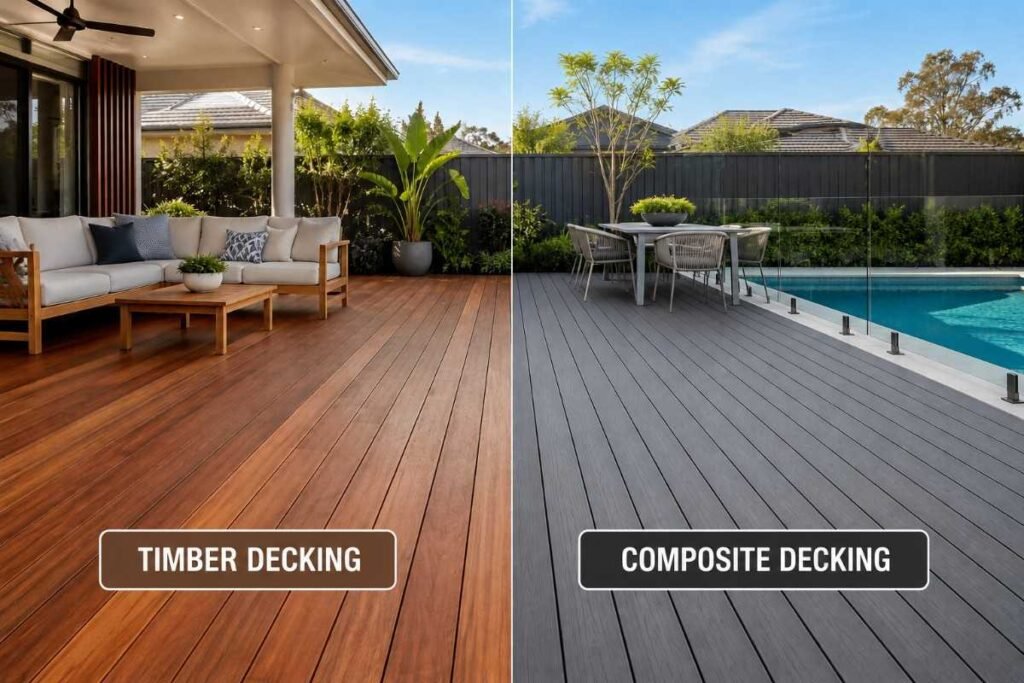
Timber can feel cooler underfoot for short stretches, but it splits, greys out, and needs regular oiling to hold up under UV. Composite skips the sanding and resealing, and it won’t splinter, which counts for something if kids or dogs are running around barefoot. The catch is that composite needs the right colour picked from the start, since you can’t paint your way out of a heat problem later the way you can with timber.
Finding the Right Composite Deck Installers
Choosing the board is half the job. The other half comes down to Composite Deck Installers who factor in joist spacing, ventilation, and drainage falls for your specific site, rather than laying boards to a generic spec. Ask any installer how they handle gapping through Sydney’s humidity, and whether they’ve fitted light-toned boards on a full-sun job before. If they’ve done it, they’ll have an answer ready.
What Deck Builders Sydney Homeowners Trust Actually Check On Site
Solid Deck Builders Sydney locals recommend will walk your yard at the time of day it gets hit hardest by sun, not just during a quick morning quote visit. They’ll also check ventilation under the deck, because trapped heat down there can push the surface hotter than the board’s rating suggests on paper.
If you’re planning a deck for a sun-heavy spot in Sydney, getting the board colour and finish right from day one saves a lot of frustration later. MVR Decking has installed composite decks across full-sun sites throughout Sydney and can talk you through which boards hold up best in your yard. Check out their Composite Decking Sydney range or get in touch for a site visit before you decide.
Frequently Asked Questions
Is composite decking worth it for a full-sun backyard?
Is composite decking worth it for a full-sun backyard?
Yes, as long as you go with a lighter, matte-finished board and the substructure is ventilated properly.
Can I mix board colours to manage heat and style?
Can I mix board colours to manage heat and style?
Yes. Plenty of homeowners use a lighter tone across the open, sun-heavy area and a darker feature strip along a shaded border. It looks good and keeps the whole deck comfortable to use.
How much hotter is dark composite decking compared to light colours?
How much hotter is dark composite decking compared to light colours?
In our comparisons, dark boards ran 8 to 15 degrees hotter than light grey or driftwood boards under the same midday sun.
Does composite decking fade in Sydney's sun over time?
Does composite decking fade in Sydney's sun over time?
Quality capped boards are built to resist UV fading, though some colour softening over several years is normal. Cheaper uncapped boards fade faster and are more prone to surface wear.
Do I need a special substructure for a full-sun composite deck?
Do I need a special substructure for a full-sun composite deck?
You don’t need anything unusual, but ventilation underneath the boards matters more in full sun. Trapped heat under a poorly vented deck makes the surface hotter than it should be.
Is composite decking slippery when it's hot or wet?
Is composite decking slippery when it's hot or wet?
Most modern composite boards have a textured, grooved surface for grip. Heat alone doesn’t make them slippery, though a hosed-down deck on a hot day can feel slick until it dries.
How long does composite decking installation take for an average Sydney backyard?
How long does composite decking installation take for an average Sydney backyard?
A standard residential deck usually takes a few days to a week, depending on size, substructure work, and access to the site.