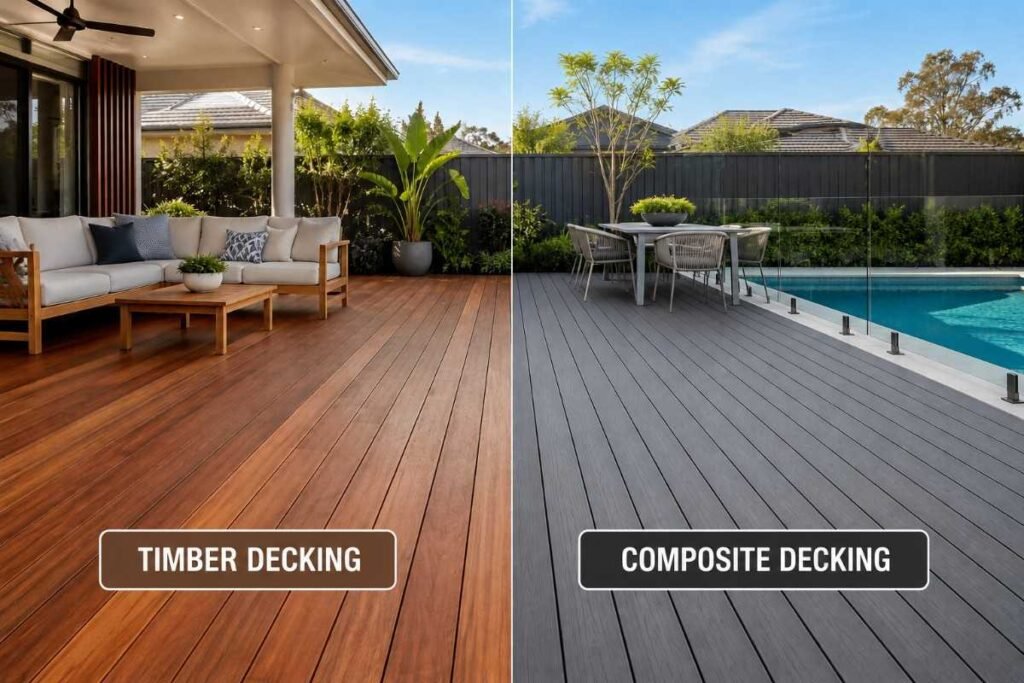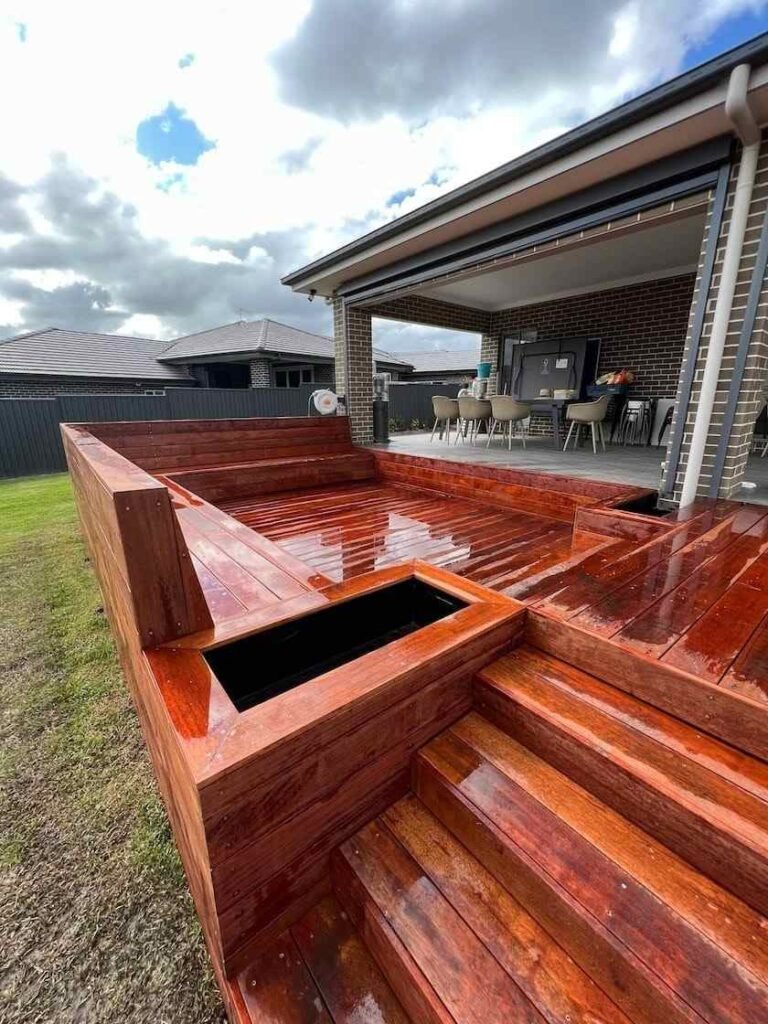

Choosing Timber Decking Sydney homeowners can rely on for years comes down to three things: picking the right species for our climate, getting the subframe right, and staying on top of maintenance. These are all important considerations when MVR Decking helps homeowners choose and build a deck suited to their property and Sydney conditions. Get those three sorted and a deck will easily outlast the mortgage. Skip any one of them and you’re looking at cupping boards, rot, or a termite bill within a few seasons. This guide walks through what actually matters, based on how timber behaves in Sydney’s mix of coastal humidity, harsh UV, and the odd bushfire-prone pocket out west.
Selecting Climate-Resilient Native and Premium Hardwoods
Not all timber holds up the same way once it’s outdoors and exposed to Sydney weather. If you want Quality Timber Decking that actually earns its price tag, start with the species.
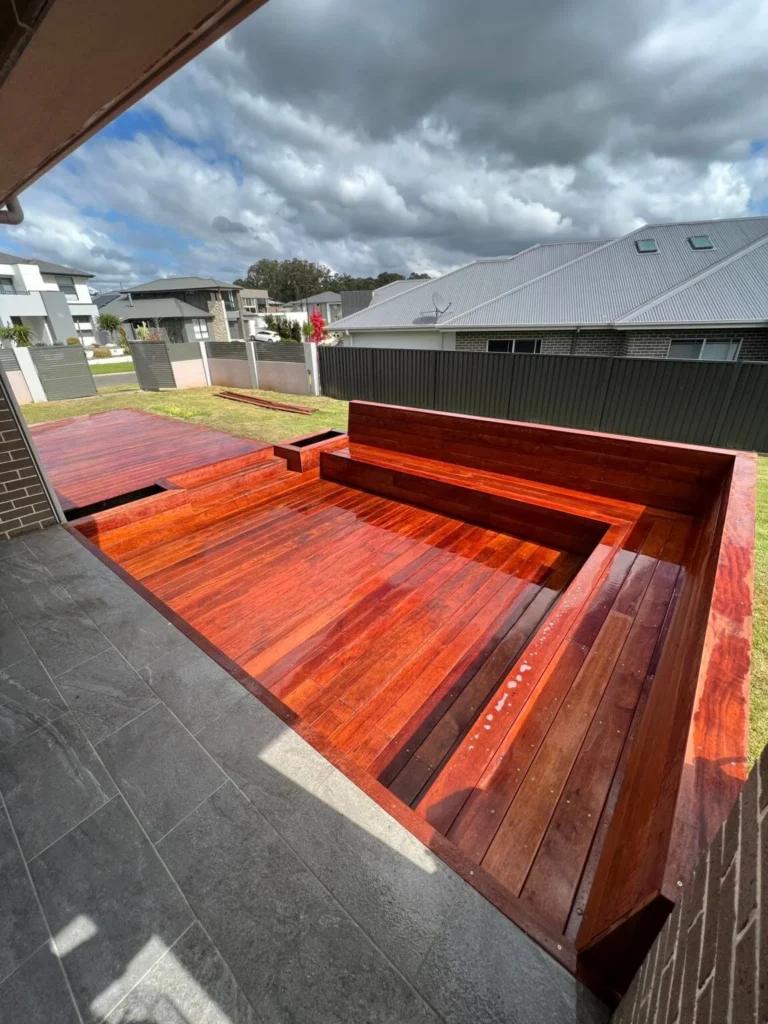
Spotted Gum is the local favourite for a reason. It’s got a Janka hardness rating that shrugs off furniture and foot traffic, natural oils that push back against humidity, and it carries a BAL (Bushfire Attack Level) rating suited to fire-prone suburbs around the Blue Mountains and Ku-ring-gai. Blackbutt is the other native worth a look – slightly lighter in colour, Class 1 durability, and it takes stain well if you want a custom finish.
Then there’s Merbau, the imported option most people have heard of. It’s cheaper up front and has decent natural durability, but it bleeds tannins in the first few rains (which stains pavers and pool surrounds if you’re not careful) and doesn’t handle direct, unrelenting sun as gracefully as Spotted Gum over a 20-year stretch.
Native hardwoods vs imported timber – Class 1 durability compared
Class 1 durability means the timber is rated for at least 25 years in-ground contact without treatment. Spotted Gum, Blackbutt, Ironbark, and Merbau all sit in this bracket, but native species generally edge ahead on long-term stability in our climate because they were, quite literally, built for it.
Spotted Gum, Blackbutt, Jarrah, and Merbau for outdoor resilience
Jarrah, from Western Australia, is a solid middle ground – deep red tone, good durability, but pricier freight into Sydney pushes the cost up. For most Sydney backyards, Spotted Gum wins on value and looks.
Understanding BAL ratings for fire-prone suburbs
If your property sits in a designated bushfire zone, council will want to see a BAL assessment before your DA or CDC goes through. Spotted Gum’s density and low flammability make it one of the few timbers that pass higher BAL ratings without needing a composite alternative.
Key Indicators of High-Quality Timber Decking
A gorgeous species choice still fails if the boards weren’t seasoned properly before installation.
Seasoned vs unseasoned timber
Unseasoned boards look fine on day one and start cupping within months as moisture escapes unevenly. Always ask your supplier for kiln-dried, seasoned stock with documented moisture content – not “green” timber straight off the mill.
Moisture content standards in high-humidity zones
Sydney’s humidity swings between a dry western summer and a soupy coastal autumn. Timber sitting between 12-15% moisture content on installation gives it room to move without warping.
FSC and PEFC certified sustainability
Certified timber isn’t just a box-ticking exercise – it tells you the forestry practice behind the board was managed responsibly, and it’s increasingly what councils and eco-conscious buyers expect to see documented.
Essential Engineering and Structural Subframe Design
The boards get all the attention, but the subframe decides whether your deck lasts. Joist spacing needs to match the board thickness (typically 450mm centres for standard 90mm boards), ground clearance has to allow airflow underneath to stop moisture pooling, and cross-ventilation prevents the kind of trapped humidity that leads to rot from underneath – often the first thing to fail and the last thing anyone checks.
Why Professional Deck Builders Sydney Make the Difference
DIY decking looks tempting until the council asks for compliance documentation. Licensed Deck Builders Sydney homeowners hire bring three things a weekend project can’t: knowledge of AS 1684 structural timber code, experience navigating council DA and CDC approval, and access to concealed fixing systems that keep the surface free of visible screws. Most reputable builders also back their work with a written guarantee – worth asking for before any contract is signed.
Sydney Timber Decking Cost Breakdown and Lifespan Maximisation
Expect to pay more upfront for hardwood than composite, but the maths flips over 25 years. A well-maintained hardwood deck – oiled every 12-18 months, sealed on install, sanded back every five to seven years – comfortably outlasts cheaper alternatives that need full replacement twice in the same period. Skipping maintenance is the single biggest cause of premature failure: UV silvering, fungal decay, and termite attack all move faster on neglected timber than on the timber itself ageing naturally.
Build Your Ideal Outdoor Living Space with Quality Sydney Timber Decking
A deck built with the right species, a properly engineered subframe, and a realistic maintenance routine will genuinely be one of the best-value additions to a Sydney home. If you’re ready to get it right the first time, talk to the team at MVR Decking – head to Timber Decking for a quote and to see the timber options available for your project.
Frequently Asked Questions
What is the best quality wood for decking in Sydney?
What is the best quality wood for decking in Sydney?
Spotted Gum is generally considered the top pick for Sydney conditions, thanks to its density, natural moisture resistance, and BAL fire rating.
What is the best decking timber to use in Australia for full sun?
What is the best decking timber to use in Australia for full sun?
Blackbutt and Spotted Gum both handle constant UV exposure well, though all timber will silver over time without regular oiling.
What is the best brand of decking in Australia?
What is the best brand of decking in Australia?
Rather than a single “brand,” quality comes down to species and supplier – sourcing seasoned, certified hardwood from a reputable timber yard matters more than any label.
How long does a quality timber deck last in Sydney's climate?
How long does a quality timber deck last in Sydney's climate?
With proper installation and regular maintenance, a hardwood deck can comfortably last 25 years or more.
How much does a timber deck cost per square metre in Sydney in 2026?
How much does a timber deck cost per square metre in Sydney in 2026?
Costs vary by species and site conditions, but hardwood decking in Sydney typically runs from the mid to high hundreds per square metre installed – get a site-specific quote for an accurate figure.