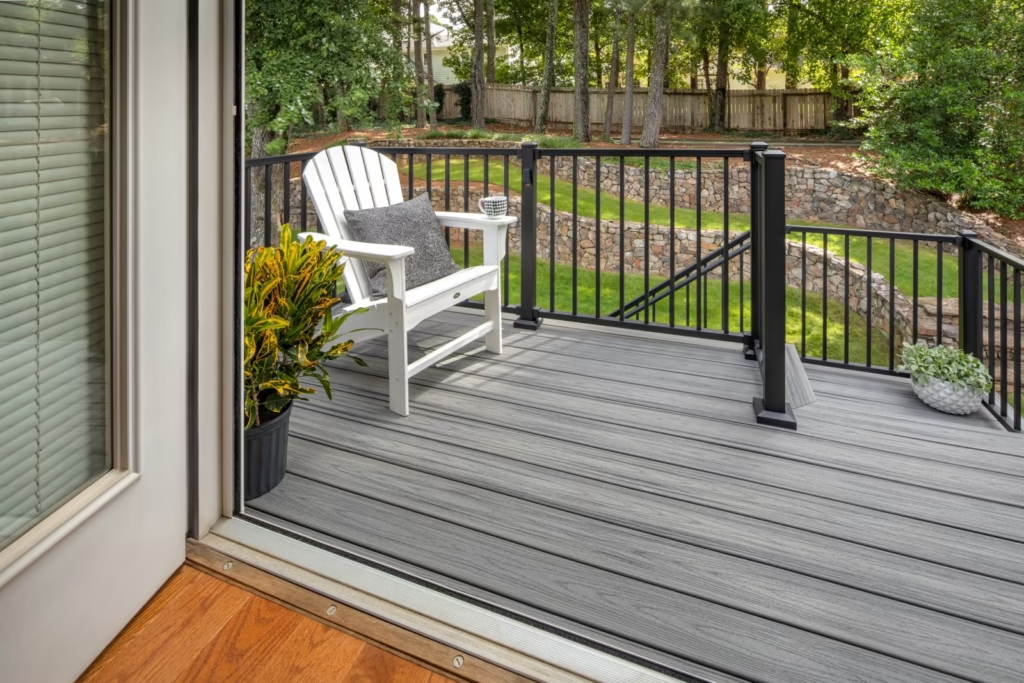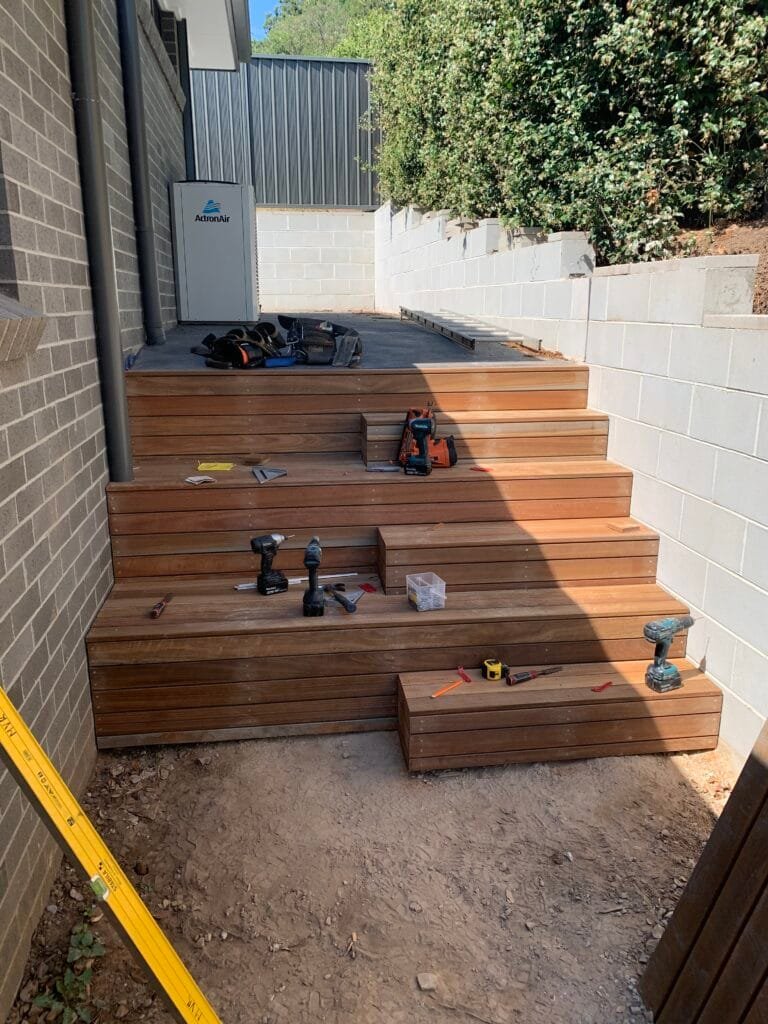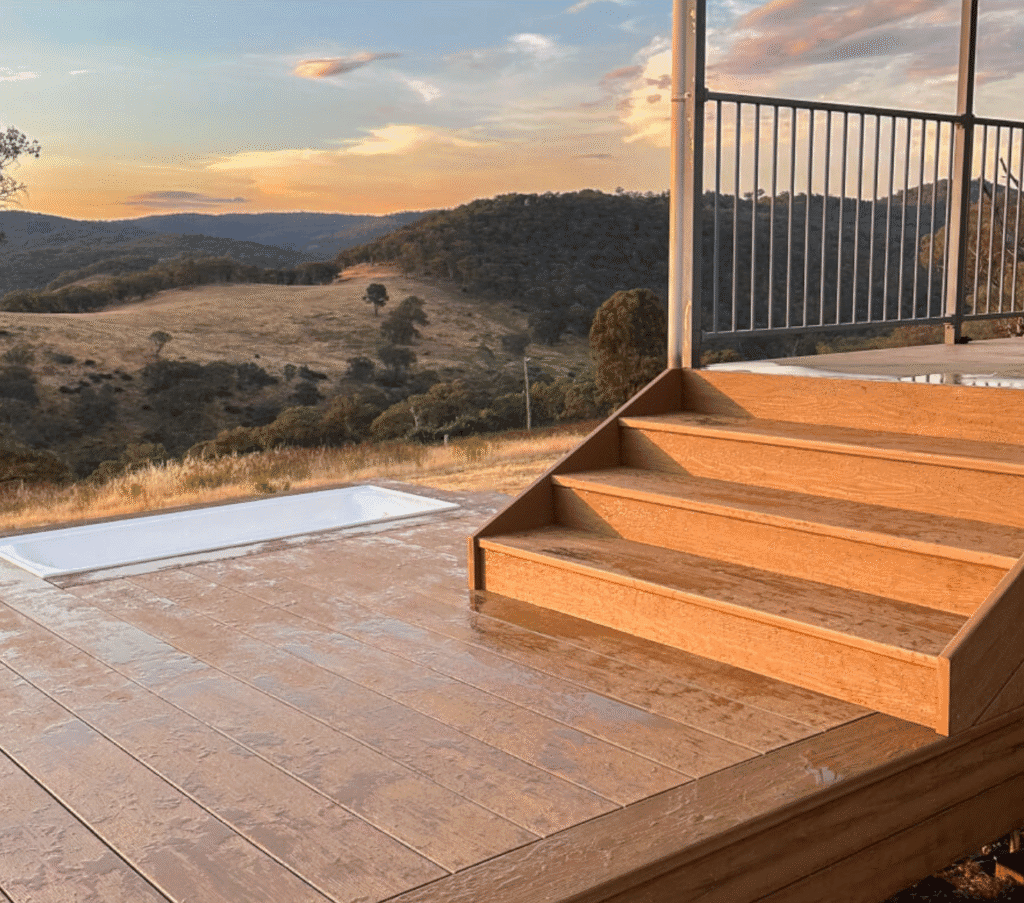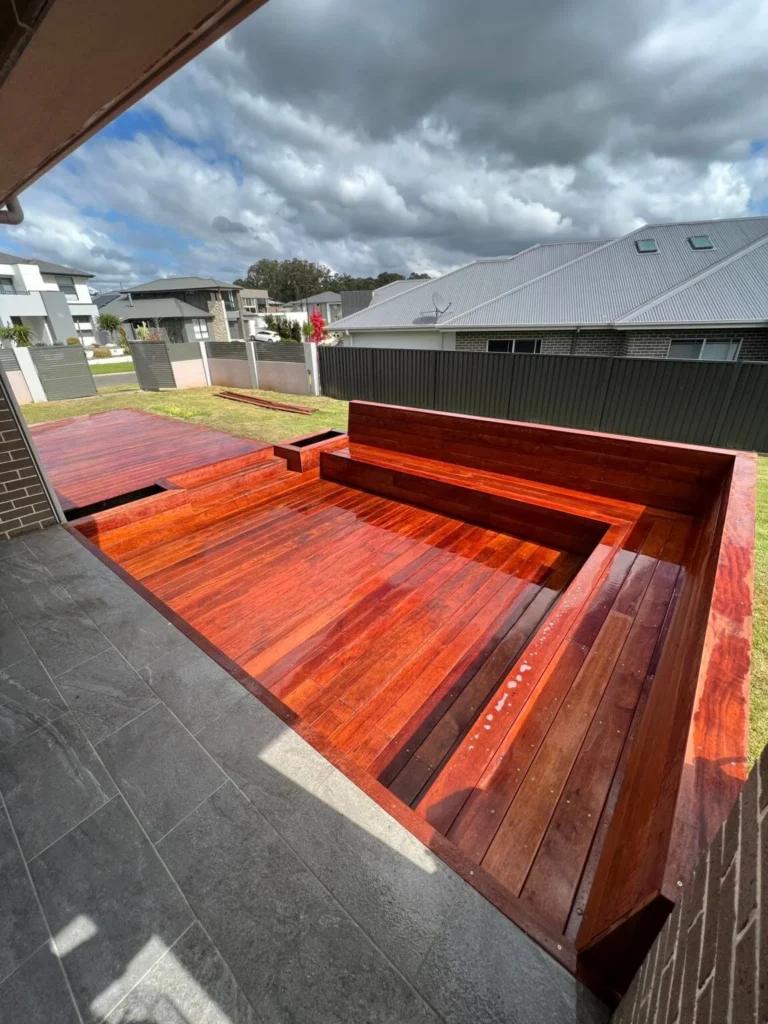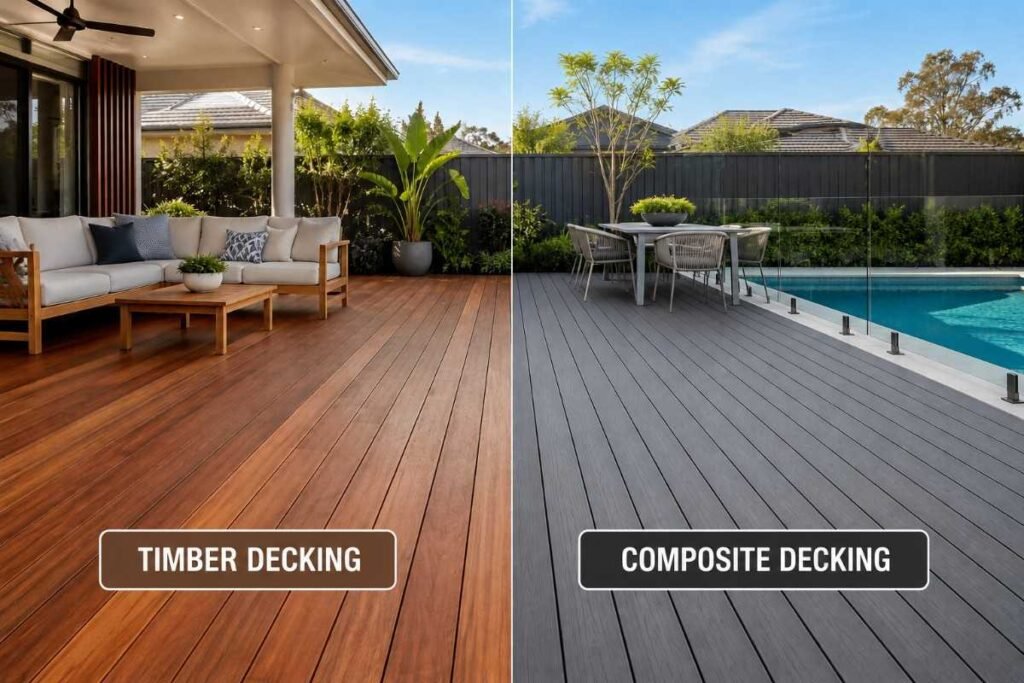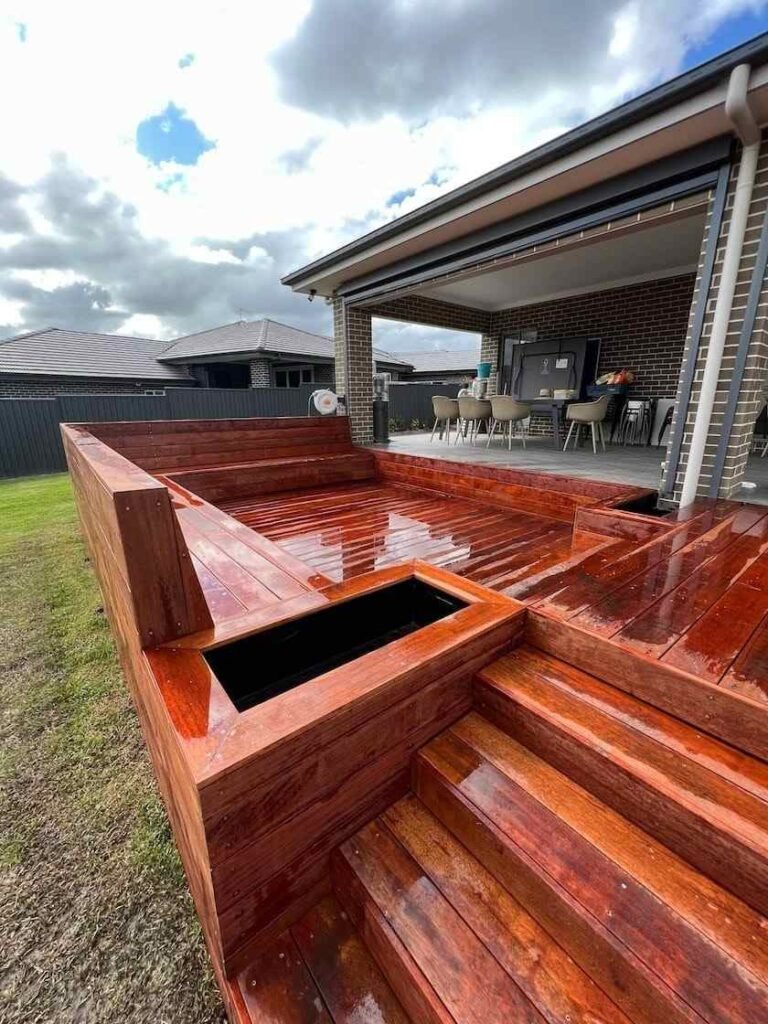

If you’ve had a timber deck in Sydney for more than a few years, you’ll know the drill. Every spring it’s out with the sander, on with the oil, and a poke around for any soft, spongy boards that mean rot’s crept back in. Between the harbour UV, summer storms, and salt air, timber decking cops a beating out here; not much survives it unscathed.
That’s why so many Sydney and NSW homeowners are pulling up their old boards in favour of composite decking they can genuinely walk away from and forget about. Done properly, swapping a timber deck for composite gives you that same warm, natural look without the ongoing maintenance, and often you don’t need to touch the structure underneath. This guide walks through whether your subframe is worth keeping, what to look for in boards that can handle our climate, what the job actually costs, and how to find deck builders in Sydney you can trust with the job.
Assessing Your Existing Deck: Can You Keep the Subframe?
The biggest swing factor in cost on any re-decking job isn’t the boards; it’s whether what’s underneath passes inspection. A sound subframe saves you thousands and a lot of time; a compromised one has to go.
Checking bearers, joists, and footings for rot, termites, and sagging
Push a screwdriver into the bearers and joists where they meet the ground. If it sinks in with barely any resistance, that timber’s lost its strength. Keep an eye out for termite activity, mud tubes, timber that sounds hollow when tapped, or exit holes. Any bounce or sag underfoot usually means a joist or bearer has already given way. It’s worth getting a licensed builder or inspector to put a load-capacity assessment in writing, both for your own peace of mind and for council sign-off later on.
Joist spacing: why composite needs 300mm – 400mm centres
This is where a lot of DIY re-decking projects come unstuck. Timber can handle wider joist spacing, and plenty of older Sydney decks were built at 450 mm- 600 mm centres, which was fine for solid hardwood. Composite has more flex, so most manufacturers cap spacing at 300 mm – 400 mm centres, and it gets tighter again if you’re laying boards on a diagonal. Most homeowners can keep the existing bearers and footings and just add extra joists to meet spec. Skip this step, and you’ll likely end up with a deck that flexes or goes wavy, and you’ll void your warranty in the process.
Ground clearance, airflow, and drainage in Sydney conditions
Composite needs airflow underneath just as much as timber does, since trapped moisture invites mould and can corrode your fixings over time. With Sydney’s clay-heavy soil and the downpours we get, drainage matters. Make sure ground clearance meets the manufacturer’s minimum (usually 150 mm- 300 mm or more) and that nothing’s blocking airflow. Decks that sit low or in shade might need extra ventilation, or even a raised subframe.
Why Sydney Homeowners Are Making the Switch
Sun, rain, salt air. Sydney’s UV levels are among the highest of any major city for much of the year, and unprotected timber shows it fast. Capped composite boards use a co-extruded outer layer built to resist fading, moisture, and staining for 15-30 years, and they hold up far better against the salt air that eats away at coastal fixings.
No more oiling, staining, or splinters. A washdown with soap and water a couple of times a year is generally all a capped composite deck asks for: no sanding, no re-oiling, no splinters underfoot. Over 15-20 years, that’s a lot of weekends and maintenance dollars saved.
Bushfire safety and recycled materials. If you’re in one of Sydney’s increasingly common bushfire-prone fringe areas, you may need decking rated to a specific Bushfire Attack Level (BAL) under AS 3959. Some composite boards are tested for BAL-12.5 through BAL-29, though few will handle BAL-40 without extra precautions. Most composites are also made largely from recycled wood fibre and plastics.
Key Technical Steps for Installing Composite on an Old Subframe
Retrofitting composite onto an existing frame is more than just swapping out the boards. The key steps: inspect the bearers, joists, and fixings first; add intermediate joists anywhere spacing exceeds the manufacturer’s maximum; upgrade to hot-dip galvanised or stainless steel fixings if you’re near the coast; use hidden fastener clips for a clean, splinter-free finish; and leave proper expansion gaps of 3- 5 mm between boards and 10- 15 mm around any fixed structures.
Hiring a Sydney Deck Builder vs. DIY Re-Decking
Composite is marketed as DIY-friendly, and if your frame’s sound and compliant, a confident DIYer can save on labour. The risk in a retrofit like this is everything you can’t see: hidden rot, recalculating joist spacing correctly, and knowing when what looks like a minor repair is actually telling you the subframe needs replacing. A licensed Sydney deck builder or certified composite installer will typically assess the subframe, handle any structural work, install to the manufacturer’s specs so your warranty stays intact, sort out council requirements, and carry insurance, all of which matters for structural work, elevated decks, or bushfire-prone sites under the NSW Codes SEPP.
Replacing Timber with Composite: Sydney 2026 Cost Guide
Pricing depends on board tier, deck height, and how easy the site is to access, but as a general 2026 guide, expect $300-$700+ per square metre fully installed for a straightforward, ground-level retrofit using mid-range capped composite. A typical 25- 30 m² project often lands somewhere between $9,000 and $25,000. The biggest cost drivers are subframe condition (reusing a sound one is where most of the savings come from), board tier, balustrade requirements (any deck over 1 metre needs a compliant balustrade under NSW law), and site access. Composite costs more upfront than treated pine, but the maintenance savings close that gap over 10-15 years, and it tends to add more resale appeal, too.
Upgrade to Low-Maintenance Composite Decking in Sydney
An ageing timber deck doesn’t have to mean an endless cycle of sanding, oiling, and patch repairs. With a proper subframe assessment, boards suited to our climate, and an installer who knows the technical and compliance side of things, replacing your deck can genuinely be a one-time job. Ready for an assessment and a straightforward quote? Get in touch with the composite decking specialists at MVR Decking and let’s start the conversation.
Read More Resource.
Frequently Asked Questions
Can an existing timber deck frame be reused for composite decking?
Can an existing timber deck frame be reused for composite decking?
Usually yes, as long as the bearers, joists, and footings pass inspection for rot, termites, and sagging. Most frames still need extra joists added to hit the 300 mm- 400 mm spacing composite requires, since original timber decks are typically built wider than that.
What are the main downsides of composite decking?
What are the main downsides of composite decking?
Higher upfront cost than treated pine, boards can run hotter underfoot in direct sun (especially darker colours), and you can’t sand out scratches like you can with solid timber. Lighter colours and a good capped product minimise most of this.
What is the best composite decking brand in Australia?
What is the best composite decking brand in Australia?
There’s no single best brand; it comes down to budget, colour, and warranty. Look for capped construction, a UV/stain warranty of at least 15-25 years, and a suitable slip rating, then compare a shortlist against those criteria.
What decking materials are better than composite decking?
What decking materials are better than composite decking?
Depends on what you’re after. Hardwood like spotted gum looks premium and can be sanded back for decades, but needs more upkeep. Aluminium is virtually maintenance-free and fire-resistant, but pricier and has a different look. Composite is the best all-around balance for most homeowners.
How much does it cost to replace a timber deck with composite decking in Sydney?
How much does it cost to replace a timber deck with composite decking in Sydney?
Roughly $300 – $700+ per square metre, fully installed in 2026, depending on board tier, subframe condition, height, and access. A typical 25 – 30 m² job usually falls between $9,000 and $25,000. Get an itemised quote to see what’s driving your specific price.
Does composite decking get too hot to walk on in Australian summers?
Does composite decking get too hot to walk on in Australian summers?
Dark boards can get quite hot in direct sun, sometimes more than timber. Lighter, sand or grey tones stay noticeably cooler, and shading over key walking areas helps a lot on hot days.
Do I need a licensed builder to replace a wood deck with composite in NSW?
Do I need a licensed builder to replace a wood deck with composite in NSW?
Depends on the scope. Simple re-decking on an existing compliant frame can often be owner-built. But structural changes, decks over 1 metre high, or anything outside NSW’s exempt development criteria will need a licensed builder and possibly council or certifier sign-off. Check your site against current rules before starting.